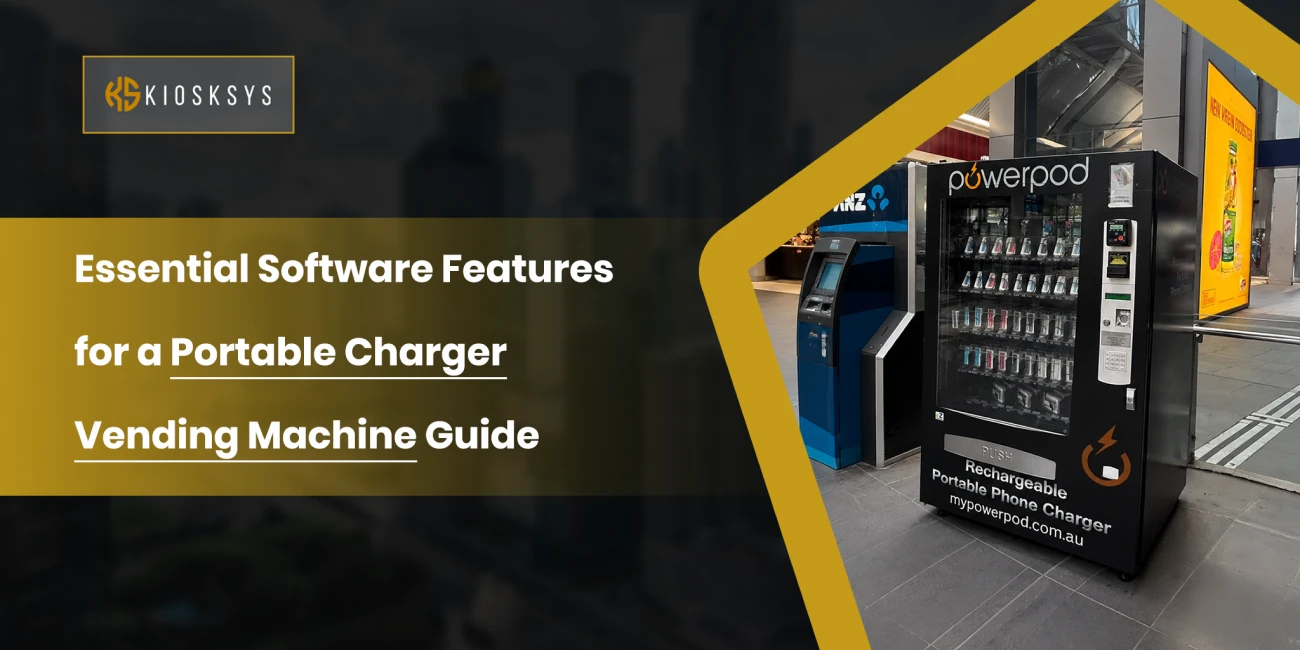
Why Is Software the Real Product Here?
Many new operators see the app as a secondary product to the vending machine. That is backward. At this point, the hardware is mostly standardized, with dozens of factories producing the same type of locker style cabinet with a few design variations. The difference between a money-making machine and one sitting unused in a corner is the software that controls it.
- The numbers make it clear that this is a market businesses should not ignore.
- The global power bank market is projected to reach around $21.7 billion, driven by growing demand for portable charging.
- The expansion of 5G devices and public charging networks in airports, malls, and transit hubs is increasing demand for power bank vending machines.
- Smart, IoT-enabled vending machines allow operators to monitor devices remotely, push updates, and detect issues before they become costly failures.
- Many modern charging kiosks also integrate with digital advertising platforms, creating an additional source of revenue beyond charger rentals.
- Because these machines require a significant upfront investment, reliable software that reduces maintenance, minimizes fraud, and improves uptime can have a major impact on long-term profitability.
In other words, your hardware attracts customers to your machine. They will trust the software enough to swipe their card, the unit will come back in one piece, and you will learn about any problem before a customer does. These are the top 10 features to take into account.
1. Real-Time Inventory and Slot Tracking
Every slot in the cabinet needs to report its status live: charged, in use, missing, or faulty. Without this, you are relying on someone physically checking the machine, and by the time you notice a slot has been broken for a week, you have lost a week of paid use from it. Good systems push slot-level data to a dashboard so you know how many working chargers exist across your fleet at any moment.
2. Multiple payment rails and contactless payment.
This is a business that’s largely cashless. Customers have a short amount of time to tap a card, scan a QR code, or pay with a mobile wallet. If you are not running in a single country, you should support regional wallets and, at the very least, QR-based mobile payments and card readers. The number one reason for people leaving a vending machine without a charger is slow checkout or a checkout that fails.
3. Dynamic Pricing and Session Duration Rule.
When you have multiple locations in a campaign, you want to be able to price different locations, times of day, and even events in the same location. The machine in a concert venue can be charged at a different rate than one in a relaxed hotel lobby. Remote pricing tier adjustment software is cost-effective quickly.
4. Remote Monitoring and Diagnostics
This is the capability that transforms one machine operator into someone who can operate twenty locations without needing to bother with sleeping. A battery, a payment terminal going offline, or a jammed slot are indicators that are detected remotely before a customer complains. This, when combined with alerts directly to your phone, reduces the need to go to the emergency site and keeps machines working and not sitting idle.
5. App and QR Integration for Dispensing and Return
Most of the users today expect to scan a code, receive a charger, and leave without a form. This should be done with a light app or a browser-based flow, without having to download an app on the user’s device. It’s even more important with faster-moving travelers, which is why a phone charger vending machine located near a gate needs to be fast to dispense and return the phone.
6. Theft and Damage Deterrents
One of the largest line items that costs any phone charger vending business is when they fail to get returned units. It should also be possible to use a deposit hold, have late fees that are charged after a certain period of time, and ideally have GPS or Bluetooth tracking tags embedded within the power bank itself so that if it walks away from you, it can be located – or at least marked off for replacement.
7. Multi-Location Fleet Management Dashboard
Once you go beyond one or two sites, you need a single dashboard showing revenue, uptime, and inventory across every machine you own. This is the difference between running a business and running a hobby. A good dashboard breaks performance down by location so you can spot which spots are worth the floor space and which ones are dead weight.
8. Customer Account and Loyalty Tracking
Repeat usage is where the real margin lives. Software that remembers a returning customer, offers a small discount on their third visit, or lets them subscribe to unlimited monthly use turns a one-off transaction into recurring revenue. This is especially valuable for a cell phone charger vending machine placed somewhere people pass through regularly, like a gym, office lobby, or campus building.
9. Analytics on Usage Patterns and Peak Demand
Knowing which hours, days, and locations drive the most transactions lets you restock, reposition, or even relocate machines intelligently. If a unit near a mall food court spikes every weekend evening but sits idle on weekday mornings, that data should inform staffing for refills and even where your next vending machine purchase goes.
10. Compliance, Receipts, and Data Security
Payment processing pulls in card data and personal information, so the backend needs to meet basic PCI compliance standards and keep that data encrypted. Automated digital receipts also reduce disputes and chargebacks, which matter a lot given how thin margins can be on a low-cost-per-use business model.
Bringing It Together
None of these ten features work in isolation. A theft deterrent without remote monitoring just tells you a unit is missing after the fact. Dynamic pricing without analytics is a guess. The operators who do well in this space treat the software stack as one connected system, not ten separate add-ons bolted onto a vending machine. If you already have the hardware and the inventory, your next dollar is almost always better spent on tightening up these software pieces than buying another cabinet.
Search demand backs this up, too. People frequently look up a portable charger vending machine near me or a charger vending machine near me when their phone is dying in public, which means visibility and uptime matter just as much as the feature list. A battery charger vending machine that shows up correctly on maps, has working payment, and actually has charged units inside it will beat a fancier machine that is offline half the time.
Frequently Asked Questions
What is the price of developing or purchasing software for a chargeable vending machine?
License prices vary from a few thousand dollars for a simple white label solution to the high end of the five figure mark for a fully-customized solution with dedicated support. Most new operators begin on top of an existing white-label platform and customize branding and prices, reducing both costs and development time.
How long does it take to set up the software once the hardware is on site?
A simple white label solution with payment integration at one point can be live in one or two days, as long as payment processors have been approved. Usually requires a few weeks to set up and test a multi-location rollout with custom branding and loyalty programs completely.
What are the software side's maintenance requirements, if any?
Firmware and app updates on a regular basis and payment gateway checks on a periodic basis. There is a lot of mechanical (jammed slot, cable wear, cleaning) maintenance that takes place on a daily basis in this business and not that much software, but the software does tell you when the mechanical maintenance needs to take place.
Do I need a mobile app, or can QR-based web access work instead?
A QR-based web flow is usually enough, especially early on. It avoids forcing customers to download an app for a five-minute charge and works fine for both a phone charger vending machine airport placement and a quiet retail corner. A dedicated app makes more sense once you have repeat customers and loyalty perks worth opening it for.