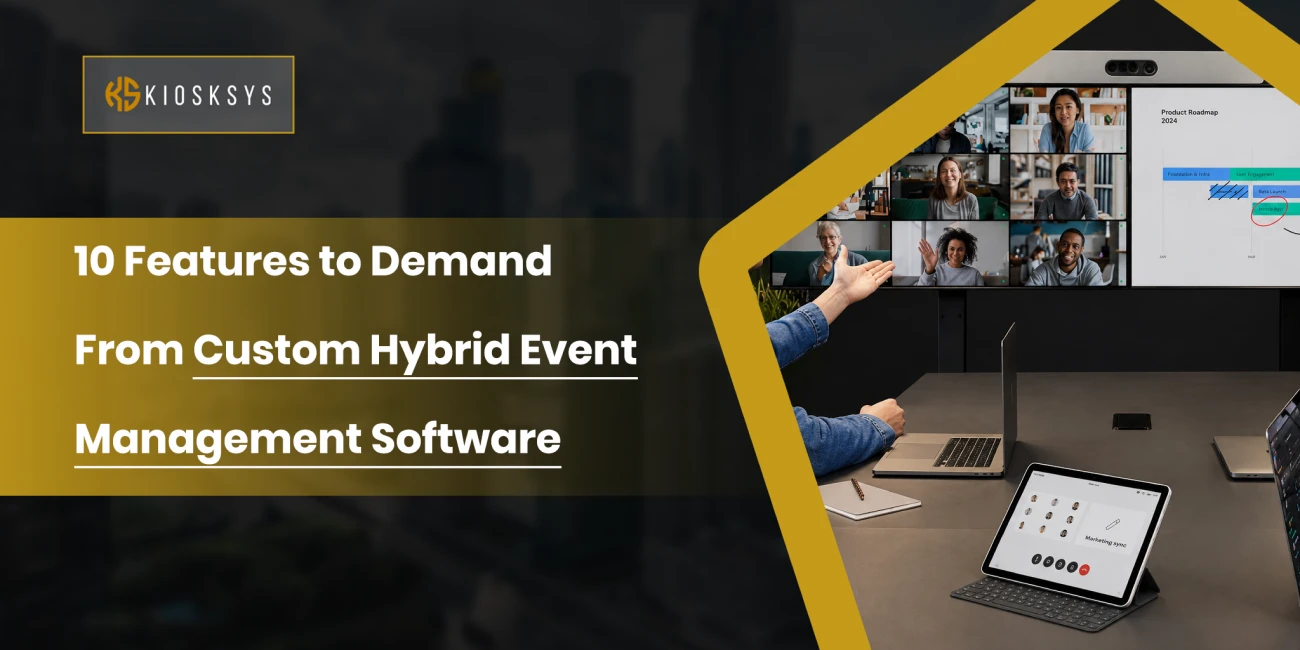
The Hybrid Event Software Features Organizers Cannot Afford to Ignore
Anyone who has managed a hybrid event with multiple disconnected tools knows how quickly things can go wrong. Virtual attendees lose audio, online questions never reach speakers, and staff end up moving data between registration, streaming, and CRM platforms manually.
The problem is rarely the event itself. It is software that was never designed for hybrid experiences. Custom hybrid event management software can solve that, but only if it includes the right capabilities from the start. These are ten features worth demanding before development begins:
1. One Dashboard for In Person and Virtual Attendees
This sounds obvious. It rarely happens by default. Most platforms were built for either physical events or virtual events, then had the other mode added later as a feature. What you end up with is two separate attendee lists, two separate check in flows, and reporting that treats your in room and online audiences as different events. That creates real operational problems: your event team cannot see the full picture in one place, and anything that needs to happen across both audiences, like a capacity update or a last minute room change, has to be done twice.
Demand a single attendee record per person, regardless of how they are attending. Registration, communication, session access, and post event data should all live in one place. If the software demo shows you toggling between an “in person view” and a “virtual view” as separate screens, that is a red flag.
2. Live Registration That Updates Across Both Audiences in Real Time
Hybrid events have capacity constraints on both sides. The room holds 200 people. The virtual stream can handle 2,000. When registration hits those thresholds, the software needs to respond instantly, closing the right ticket type, updating waitlists, and notifying the event team without anyone having to manually intervene.
This matters more than people realize until they are dealing with an oversold room two days before the event or a virtual session that capped out because nobody noticed the counter stop updating. Real time registration sync is not a nice to have. It is how you avoid genuinely embarrassing operational failures.
3. Full Brand Control Across Every Touchpoint
There is a particular kind of frustration that comes with spending months planning a high quality event and then sending attendees a registration confirmation email with a software company’s logo in the footer. Or a virtual lobby that looks like every other virtual lobby because the platform only lets you change the banner image.
Custom hybrid event management software should give you complete control over the visual experience from the first registration page through to the post event survey. That means custom URLs, custom email templates, branded virtual environments, and none of the platform’s own branding anywhere an attendee will see it. If a vendor says “white labeled” but cannot show you a fully branded end to end demo, push harder.
4. Native Streaming, Not a Link to Somewhere Else
Redirecting virtual attendees to a third party streaming platform mid event is one of the fastest ways to lose them. Every additional click, every new tab, every “please download this app to continue” prompt costs you audience. Drop off rates spike at each friction point.
Native streaming means the video lives inside the platform itself. Attendees do not leave to watch. The stream, the session chat, the Q&A, and the attendee profile all exist in the same environment. This also means your engagement data and your streaming data are in the same place, which becomes important when you are building post event reports.
5. Session and Agenda Management That Handles Real Complexity
A hybrid conference is not one event. It is multiple rooms running simultaneously, some sessions recorded, some live only, some available to virtual attendees, and some restricted to in person, speakers joining remotely for some slots and physically present for others. Generic event tools handle the simple version of this. Custom hybrid event management software needs to handle the complicated version without your team having to maintain a separate spreadsheet to track it all.
Specifically, the system should manage room capacities and virtual access limits per session, handle speaker specific access permissions, flag scheduling conflicts automatically, and let attendees build personalized agendas that reflect what they are actually able to attend based on their ticket type and attendance mode. Session management that does not account for the hybrid layer is just a conference app.
6. Engagement Tools That Work Equally Well for Both Audiences
Live polling, Q&A, and networking are the things that separate a good event from one people forget by the time they get home. They are also the features most likely to be botched in a hybrid setup, because they were designed with one audience in mind.
A Q&A tool that only captures questions from people in the room excludes everyone online. A polling tool that shows results on the screen in the room but not in the virtual platform creates two different experiences of the same moment. Networking features that only work for in person attendees make virtual attendees feel like second class participants, which they will tell you in the feedback.
The standard to hold out for: every engagement feature should work identically for both audiences. The person in seat C12 and the person watching from Singapore should be able to submit a question, answer a poll, and request a one to one meeting with the same number of clicks.
7. Sponsor and Exhibitor Management With Measurable Reporting
Sponsors care about two things: visibility and proof. A custom hybrid event management system should give them both, and it should be able to do it across both the physical and virtual dimensions of the event.
For in person sponsors, that means digital signage integration, session sponsorship branding, and lead capture at physical stands. For virtual sponsors, it means branded virtual booths, click through tracking on sponsored content, and visibility into how many attendees visited and for how long. The reporting needs to pull all of this into a single sponsor facing summary that shows total reach across both audiences, not two separate reports that the sponsor has to reconcile themselves.
Sponsors who cannot clearly see what their money returned will not come back. Sponsors who get a clean, comprehensive ROI report are a lot easier to retain.
8. Analytics That Go Beyond Attendance Numbers
Headcount is the metric every event report leads with, and the least useful one for improving the next event. A tailored hybrid event management solution should capture significantly more than who showed up.
The data points that actually matter: session level attendance broken down by audience type, average watch time per virtual session, drop off points in the virtual stream, Q&A participation rates, networking meeting completion rates, sponsor booth dwell time, and registration to attendance conversion by ticket type. For in person attendees, integration with badge scanning and access control systems lets you track room level movement and session popularity in real time.
This level of data is what lets you make genuinely informed decisions about the next event: which sessions to expand, which to cut, which sponsors to upsell, and where the virtual experience is losing people.
9. Clean Integration With the Tools You Already Use
Tailored hybrid event management software does not exist in isolation. It sits inside an organization that already has a CRM, probably a marketing automation platform, likely an accounting or finance system, and possibly a membership database. The software needs to talk to all of them without requiring a manual export every time something changes.
This means proper API integration, not CSV imports. Attendee data should flow into your CRM automatically when someone registers. Payment records should hit your finance system in real time. Post event engagement scores should update contact records in your marketing platform, so follow up campaigns are actually relevant to what each person did at the event.
Any custom build that requires your team to move data manually between systems has not solved the problem. It has just moved it.
10. Post Event Automation That Triggers the Moment It Ends
The 24 hours after an event are when attendee engagement is highest and when most event teams are too exhausted to act on it. Post event follow up that goes out three days later, once someone has had time to write the emails, is significantly less effective than follow up that goes out within the hour.
A custom hybrid event management system should let you configure post event automation in advance: personalized thank you emails based on which sessions someone attended, certificate generation for CPD or accredited events, feedback surveys that go out while the experience is still fresh, and re engagement sequences for people who registered but did not show up. All of this should trigger automatically the moment the event closes, without anyone having to press send.
The organizations that do this well consistently report higher feedback completion rates, better sponsor satisfaction scores, and stronger delegate retention for future events. The ones that do not are leaving the most valuable part of the event lifecycle to chance.
Frequently Asked Questions
How long does it take to build custom event hybrid management software?
A mid complexity build typically takes between three and six months from brief to launch. More complex builds involving multiple integrations, custom streaming infrastructure, or large scale attendee management can take six to twelve months. The timeline depends heavily on how clearly the scope is defined at the start.
Is custom hybrid management software for events only for large organizations?
No. The case for custom software is based on the cost of the problem, not the size of the organization. A 15 person events agency running 30 hybrid events a year may have a stronger ROI case for a custom build than a large enterprise running two events annually.
What should I look for in a tailored hybrid event management software company?
Look for a development partner who has built event technology before, not just general software. Ask to see examples of hybrid specific builds, ask how they handle post launch maintenance, and get a clear answer on how they manage scope changes during the build. A flat rate fixed scope quote with a separate maintenance line is the structure to aim for.