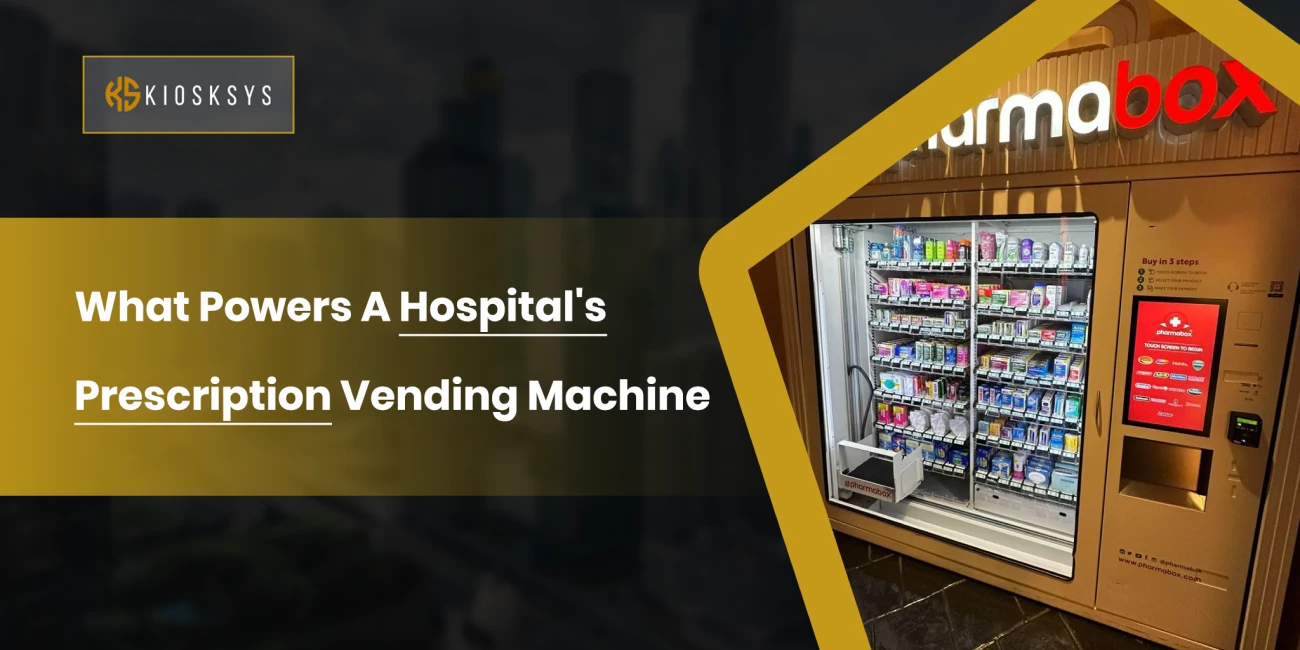
How Hospitals Use Prescription Vending Machine For After Hours Discharge
A patient gets discharged from the ER at 2 am. The prescription is written. The hospital pharmacy closed hours ago, and the nearest 24 hour pharmacy is a 20 minute drive away. Most patients just go home. A lot of them never fill that prescription at all.
This is one of the most common gaps in hospital care, and it’s also one of the easier ones to close. Point of care prescription dispensing systems, sometimes loosely called prescription vending machines, let a patient pick up their actual medication before they leave the building, even at 2 am on a Sunday. The software behind these machines is what makes that possible.
The Problem These Systems Solve
Primary non adherence is the industry term for prescriptions that are written but never filled, and it happens far more often than most people assume. The gap gets worse outside normal pharmacy hours, when a sick, tired patient has no real incentive to make a separate stop on the way home.
According to AJMC adherence research, roughly 20 to 30% of new prescriptions are never filled at all. Hospitals that have added point of care dispensing report real results. A peer-reviewed analysis of InstyMeds installations found the average emergency department site runs a primary adherence rate of 91.7%, against a national average of around 70%. Patients who filled antibiotic prescriptions through the system also returned to the ER within two weeks at a rate of 1.3%, compared to 5.3% for those sent to an outside pharmacy.
What The Prescription Machine For Vending Actually Does
The machine itself just holds and dispenses medication. The software is the part doing all the actual work behind that, turning a written order into a labeled, insurance checked, pharmacist approved package that the patient can safely walk out with. Here is what happens at each stage, in more detail than the marketing pages usually give.
1. Prescription Sent Electronically
A doctor or discharge nurse enters the order directly into the hospital’s existing prescribing system, the same interface they would use to send any other e-prescription. That order is then routed automatically to the dispensing software rather than to an outside retail pharmacy, using the same electronic prescribing standards (NCPDP SCRIPT, in most US systems) that any pharmacy would receive.
No paper changes hands at this stage. The patient typically doesn’t see anything yet, beyond being told a machine will have it ready shortly.
2. Pharmacist Reviews And Verifies
Once the order lands in the dispensing software, it sits in a queue for pharmacist review before anything can be released. A licensed pharmacist, often working remotely from a centralized service center rather than on site, checks the order against the patient’s known allergies, current medications, and dosing, the same clinical check that would happen at a counter.
If something looks off, the pharmacist can flag it, contact the prescriber, or reject the order outright, so the system never treats this as a rubber stamp step. This is the step most people miss when they hear “vending machine,” and it’s the one that keeps the whole process legally and clinically equivalent to a normal pharmacy fill.
3. Insurance And Payment Checked
While the pharmacist review is happening, or immediately after, the software runs a real time insurance adjudication request, the same kind of claim submission a retail pharmacy would send. If the claim processes automatically, the patient’s copay is calculated before they ever reach the machine.
If it doesn’t process automatically, a technician at the vendor’s patient service center can step in using the patient’s basic demographic information, sometimes contacting the patient directly through a phone built into the dispenser. Patients without coverage are shown the standard retail price, and some hospitals choose to absorb that cost entirely for certain cases instead of charging the patient.
4. Machine Selects Labels And Dispenses
Once the order is approved and payment is settled, the software sends a release command to the physical dispenser. The machine locates the correct pre packaged medication using barcode verification, often a triple check against the order, prints a patient specific label with dosing instructions and safety warnings, and seals the package.
This entire mechanical sequence typically takes well under a minute. Most of the total wait time a patient experiences happens earlier, during pharmacist review and insurance processing, not at the machine itself.
5. Patient Picks It Up
The patient enters a secret code they were given at discharge, either on a printed slip or sent digitally, depending on the hospital’s setup. The machine releases the sealed, labeled package directly to them. There is no counter, no second line, and no separate stop on the way home, which is the entire point of the system.
Why Pharmacist Verification Still Matters
It’s worth being direct about this, since the phrase “vending machine” makes people picture something fully automated with no human involved. That isn’t how this works, and for good reason.
A pharmacist still has to review and approve every order before anything is dispensed, even when that review happens remotely rather than face to face. The software’s job is to remove the waiting and the travel, not the professional oversight. This is also why the industry avoids describing it as a pharmacy vending machine in the retail sense. Most regulations draw a hard line between supervised prescription dispensing and unsupervised retail vending of over the counter products.
Where Hospitals Are Using This Today
These systems show up in a fairly narrow set of settings, mostly where the gap between discharge and the nearest open pharmacy is widest.
1. Emergency And Urgent Care Discharge
A patient leaves with antibiotics or pain medication already in hand instead of a piece of paper and a problem to solve later. Baptist Health’s Urgent Care centers in Miami Dade and Broward counties run this exact setup through their Rx Now program.
2. After Hours Inpatient Discharge
Patients discharged overnight, when the main pharmacy is closed or short staffed, can still get same day access to new medications instead of waiting until morning rounds.
3. Rural And Underserved Areas
Where the nearest 24 hour pharmacy is genuinely far away, sometimes 45 minutes or more, a hospital based dispenser can be the only after hours option a patient realistically has.
What It Actually Costs
The cost conversation usually gets skipped in coverage of these systems, so here’s what’s actually verifiable across vendors.
Hardware
Vendors don’t publish flat sticker prices for hospital grade point of care dispensers like InstyMeds. Pricing is quote based since it depends on machine capacity, formulary size, and whether the hospital buys or leases. As a rough anchor, comparable pharmacy automation hardware in the same general category leases for around $895 to $995 per month, though those specific units are built for internal pharmacy filling rather than ATM style patient pickup, so treat that as a ballpark rather than a quote.
Software And Services
This is the real recurring cost. The license covers e prescribing integration, real time insurance adjudication, remote pharmacist review, inventory monitoring, and regulatory reporting, such as PDMP and DEA logs. It’s billed like a clinical software subscription, not a one time purchase.
Patient Facing Fees
Programs like Rx Now charge a modest convenience fee per medication, often around $5, regardless of insurance coverage. Patients pay the standard retail price when there’s no insurance match, though some facilities cover the cost entirely as compassionate care. One InstyMeds user reported saving $20 by having insurance processed through the machine instead of paying cash.
The Cost Of Doing Nothing
InstyMeds frames the comparison around opportunity cost. It estimates patients lose around $43 on average just from the time spent seeing a provider, before they’ve even driven to a pharmacy. Layer in a missed dose or a return ER visit, and the math tips toward the dispenser fast. That’s the business case hospitals use internally: fewer bounce backs, not machine revenue.
If you’re hoping to comparison shop this like an Amazon prescription vending machine listing, there’s nothing to find there. Hospital grade dispensing systems aren’t sold as off the shelf retail hardware, so the answer there is effectively N/A. They’re licensed clinical systems sold directly by vendors, bundled with the software, pharmacist review service, and compliance reporting that make the whole thing legal to operate.
Off The Shelf Vs Custom Prescription Vending Machine For Your Facility
Once a hospital decides to do this at all, the next decision is whether to buy a standard packaged system or work with a vendor on something built around the facility’s specific setup. Each route trades off differently depending on size, EHR landscape, and how much the brand experience matters.
Medical History And EHR Integration
Off the shelf systems come with a fixed integration layer, connecting to common EHR platforms such as Epic, Cerner, and Meditech through pre built interfaces. This works well if the hospital already runs one of the systems the vendor explicitly supports, and it’s typically the fastest path to a working medication history pull at the dispenser.
A custom build is designed to pull and reconcile data from whatever combination of EHR, lab, and pharmacy systems the facility actually runs, including legacy or specialty platforms a standard package wouldn’t anticipate. This matters most for networks running multiple EHRs across different sites, or facilities with non standard medication history workflows tied to a specific patient population.
Branding And Patient Experience
Off the shelf hardware and kiosk software usually carry the vendor’s own branding, so the dispenser, screen, and printed instructions visibly read as a third party machine rather than part of the hospital itself.
Custom builds can be white labeled so the kiosk interface, receipts, and notifications carry the hospital or clinic’s own name and colors instead of the vendor’s. Several white label e prescription and kiosk vendors now offer this as a standard option, so patients see the hospital’s brand throughout the discharge experience rather than being handed off to an outside company’s machine. The trade off is an added setup cost and a longer build timeline.
Formulary And Workflow Fit
Off the shelf systems ship with a standard formulary template tuned for common ER and urgent care discharge medications, which is fast to deploy but less flexible for a patient population that skews toward a narrower or more specialized set of prescriptions.
Custom prescription vending machine systems let the formulary, dispensing rules, and approval workflows be built around the facility’s actual prescribing patterns and the pharmacy’s specific protocols. This fits specialty clinics, rural facilities with unusual medication needs, or multi site networks that want identical workflows across every location.
Cost And Timeline
Off the shelf systems carry a lower upfront cost and a faster installation, often weeks rather than months, with software fees typically billed at a fixed monthly or per transaction rate.
Custom prescription vending requires a higher upfront investment and a longer implementation timeline, since EHR integration, branding, and formulary work all have to be built and tested from scratch. This tends to make more financial sense for larger systems, where consistency across multiple facilities offsets the added build cost.
Frequently Asked Questions
Can These Machines Dispense Any Prescription Medication?
No. What gets dispensed depends on the formulary the hospital sets up, usually short term medications like antibiotics and pain relievers. Controlled substances and complex regimens stay with the hospital pharmacy.
Does A Pharmacist Have To Be Involved Every Time?
Yes. A licensed pharmacist reviews and approves each order before the machine dispenses it, even when that review happens remotely.
Is This Different From An OTC Vending Machine In A Hospital Lobby?
Yes. OTC machines sell non prescription items without pharmacist involvement. These systems require e prescribing, pharmacist verification, and insurance processing, the same regulatory chain as a normal pharmacy transaction.