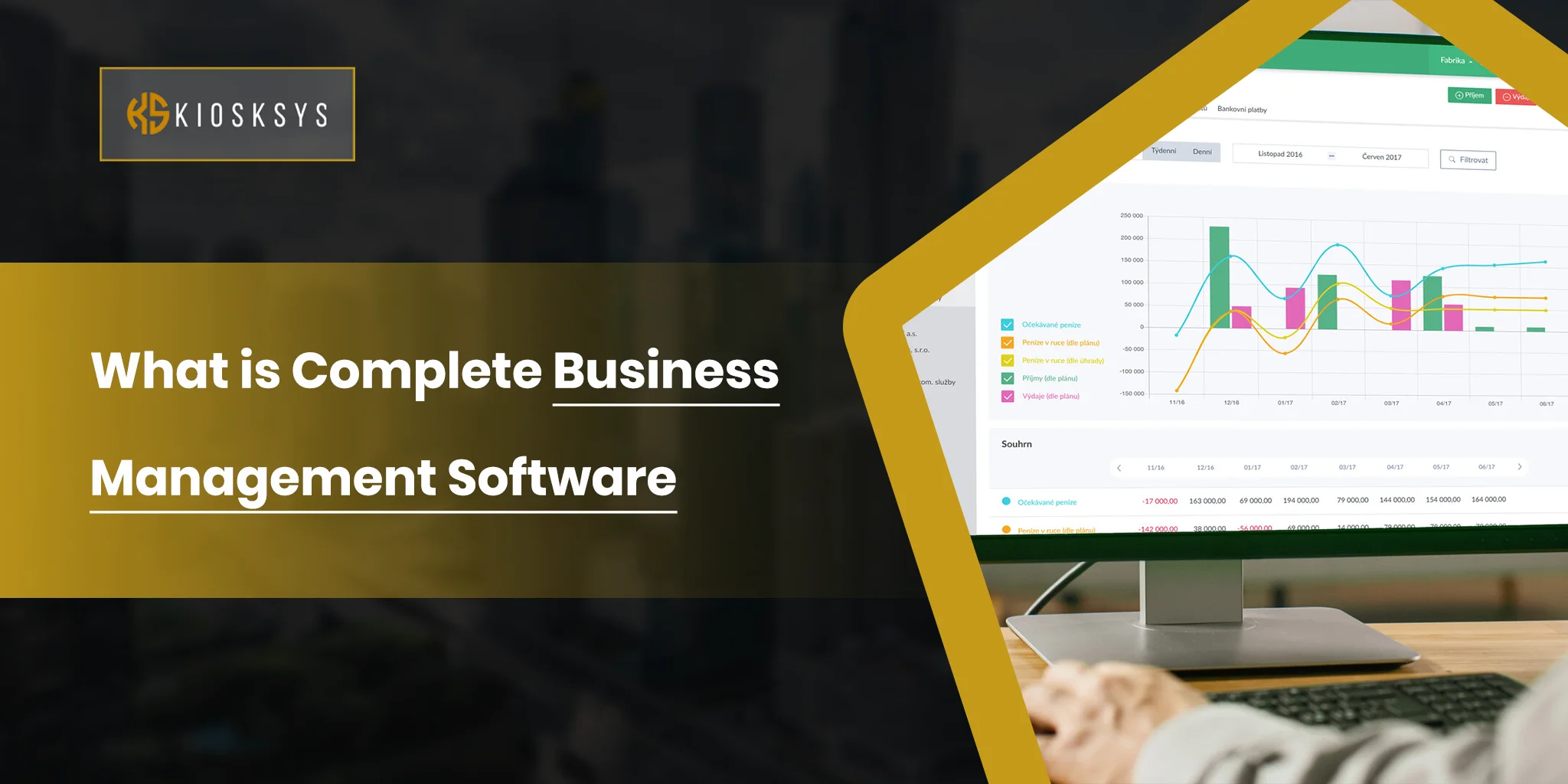
What Is Business Management Software?
At its core, business management software is an integrated platform that lets organisations handle multiple business functions without jumping between separate tools. Sales, accounting, HR, project management, inventory, reporting, it all lives in one place, and the different parts actually connect with each other.
The practical difference this makes is significant. When a sales representative closes a certain deal, the finance team can generate an invoice immediately. Inventory updates automatically. Management can see the performance data in real time. Nobody has to manually transfer information between systems or chase down updates from other departments. The whole thing just flows.
Think of it as the digital infrastructure of the business rather than just another piece of software.
What Are the Essential Features of a Modern Business System?
It offers several valuable functions and features that businesses can utilize to make their operations easier and enjoy several benefits.
Customer Relationship Management (CRM)
Every business lives or dies by its customer relationships, and a CRM module is what keeps those relationships organised and visible. Instead of having customer information scattered across email threads, notebooks, and individual spreadsheets, everything sits in one profile. Who they are, what they’ve bought, what conversations have happened, what’s in the pipeline.
Sales teams can actually track what’s going on with each opportunity rather than trying to remember it all, and customer service gets a lot better when anyone dealing with a customer can instantly see the full history.
Project and Task Management
Managing projects across a growing team without proper tooling is chaotic. Deadlines get missed, responsibilities get blurry, and managers spend more time chasing updates than actually managing. Project management features within business management software give everyone clarity on what needs to happen, who’s responsible, and where things stand at any given moment.
For managers, it means real visibility into workload and timelines. For team members, it means not having to guess what they’re supposed to be working on.
Financial Management
Keeping finances in order across a whole business is one of those things that seems manageable early on and becomes genuinely painful as things grow. Invoicing, expense tracking, payroll, budgeting, and financial reporting, when these are all handled through integrated software rather than separate tools or manual processes, the accuracy improves significantly, and the time spent on it drops.
Real time financial data also means leaders can make better decisions rather than working off numbers that are already weeks out of date.
Human Resource Management
HR covers a lot of ground. Hiring, onboarding, attendance, payroll, performance reviews, and employee records. When all of that is handled through one system, HR teams spend less time on administration and more time on things that actually affect the people in the organisation.
Self service portals for employees are also a genuine quality of life improvement. Being able to check your own payslip, request leave, or update personal details without having to email someone and wait for a response is one of those small things that makes a noticeable difference.
Inventory and Supply Chain Management
For any business that is dealing with physical products, inventory management is non-negotiable. Knowing what you have, where it is, what’s running low, and what you need to order is basic operational hygiene, but without the right tools, it’s surprisingly hard to stay on top of.
Integrated inventory management means stock levels update in real time as sales are made, purchasing can be triggered automatically when thresholds are hit, and the data feeding your supply chain decisions is actually accurate rather than being based on last week’s manual count.
Communication and Collaboration Tools
A lot of time in businesses gets lost to communication problems. Information sitting in someone’s inbox that other people need. Updates that never made it to the right team. Decisions being made based on outdated information because nobody thought to loop in the relevant people.
Built in communication and collaboration features reduce a lot of this friction. When everyone is working from the same platform and has access to the same information, staying aligned becomes much less effortful.
Analytics and Reporting
Data is everywhere in a modern business, but raw data by itself doesn’t tell you much.
What you actually need is the ability to turn that data into something you can act on. Good analytics and reporting tools let managers see performance across the whole business, spot trends before they become problems, and make decisions based on what’s actually happening rather than gut feel.
How a Modern Business System Works?
The whole thing is built around a few core principles that make the integration actually work.
Centralized Data System
Everything runs off a single shared database. Customer records, financial data, employee information, inventory levels, project status, it all lives in one place. When something changes, everyone sees the updated version immediately. No more situations where sales have one version of a customer’s details and finance has another.
Integration Across Departments
This is where the real value shows up. Departments that used to work in separate systems with information flowing slowly or imperfectly between them now operate on the same platform. An action in one area automatically triggers the relevant updates elsewhere. Sales closes a deal, and finance sees it. Inventory drops below a threshold, and purchasing gets notified. The manual handoffs that used to cause delays and errors largely disappear.
Automation of Routine Processes
A surprising amount of time in most businesses goes toward tasks that are repetitive and don’t actually require human judgment. Invoice generation, payroll calculations, inventory updates, approval workflows, and scheduled reports can all be handled automatically.
What Are the Benefits of an Integrated Business System?
From improving efficiency to reducing pressure on teams, modern business systems deliver measurable value when implemented properly.
Improved Operations
When everything runs through one system and information flows automatically between functions, the friction that usually slows businesses down starts to disappear. Less time spent transferring data, chasing updates, and correcting errors means more time spent on work that actually moves things forward.
Better Decisions
Leaders make better decisions when they have accurate, current information to work with. Comprehensive reporting across all business functions means you can see what’s really happening rather than working off assumptions or data that’s already outdated by the time it reaches you.
Collaboration
Cross departmental work becomes significantly easier when everyone is operating from the same platform with access to the same information. Teams stay aligned, communication improves, and the kind of misunderstandings that come from information silos become much less common.
Cost Savings
Running a separate subscription for every business function adds up quickly. Consolidating into one platform reduces software costs directly and the efficiency gains compound that saving over time. Fewer errors from disconnected systems also means less money spent fixing problems that shouldn’t have happened in the first place.
Scalability
One of the more underappreciated benefits is that a well built business management platform grows with you. Adding users, departments, products, and locations, the platform handles the increased complexity without you having to replace your entire system every time the business reaches a new size.
Who Needs a Modern Business Management System?
To some, software like this might sound like something that only big businesses and enterprises can use. However, the truth is far from this.
Small Businesses
Small teams wearing multiple hats benefit enormously from automation and organisation. When one person is handling sales, admin, and customer service simultaneously, having systems that reduce manual work and keep everything organised isn’t a luxury; it’s what makes the operation functional. It also builds the foundations for growth rather than creating a mess that has to be untangled later.
Medium Sized Businesses
The growing pains of a mid sized business often come down to coordination. More departments, more data, more complex workflows, and systems that were fine when the company was smaller starting to buckle under the load. Business management software provides the structure needed to scale without losing control of what’s actually happening.
Large Enterprises
At enterprise scale, the value of standardised processes and integrated data becomes even more pronounced. Multiple locations, large teams, complex operations, the ability to maintain visibility and control across all of it, while automating the things that don’t need human involvement, is what keeps large organisations running smoothly.
Conclusion
Most businesses reach a point where the collection of separate tools they’ve been using stops working well enough. Things fall through gaps, information doesn’t travel reliably between departments, and a disproportionate amount of time goes toward keeping disconnected systems roughly in sync.
Complete business management software is the answer to that problem. Bringing everything into one integrated platform doesn’t just make individual tasks easier; it changes how the whole organisation operates. Better information, smoother processes, fewer errors, and teams that can actually collaborate without fighting against their own systems.
Whether you’re a small business building proper foundations, a growing company trying to scale without losing control, or a large enterprise managing serious complexity, the right business management platform makes a genuine difference to how effectively the whole thing runs.